Swasthvritta & Yoga
The Department of Swasthavritta Evum Yoga focuses on promoting health through Ayurveda-based preventive measures and yogic practices. It emphasizes healthy lifestyle principles, including Dincharya, Ritucharya, hygiene, and community health along with practical training in Asana, Pranayama, and Meditation. The department aim is to cultivate holistic well-being and prepare students to apply preventive and promotive health measures in both individual and community settings. 1. Subject Outcomes Demonstrate application of principles of Swasthavritta in lifestyle Modifications. Assess the health status and advise preventive & promotive measures According to Ayurveda principles Demonstrate and advise Yoga and Naturopathy as health promotive and Disease preventive regimen Understand and apply the principles and components of primary health care And health policies to achieve the goal of health for all Advocate and propagate preventive principles of Ayurveda and contemporary Sciences through Information, Education and Communication(IEC) Conduct community surveys and apply epidemiological principles for the Assessment of health & morbidity as a community physician Understand and apply the principles of environmental health and its effects On public health with control measures Demonstrate skills and research aptitude for the promotion of health and Prevention of diseases Ayurveda day - 2025 Yogvidya dham visit water purification visit Swad-Aayu compition RH visit Kushtadham visit industrial Visit Ghan kachara visit Biomedical Waste Management centre

Shalakya Tantra
Basic Assistance Care While a patient is being medically cared for in the home, a homemaker or person who helps with chores or tasks can maintain the household with various housekeeping tasks. Personal care Assisting with walking from bed to wheelchair Bathing, dressing and grooming assistance Medication reminders Safety and fall prevention Status reporting to family Toileting and incontinence care Lifestyle support Light housekeeping Meal preparation and nutrition Laundry and change of bed linens Grocery shopping and errands Transportation to social & recreational activities Assistance with light exercise We are here to help when you need us By helping with daily activities, our caregivers enable clients to maintain their normal daily routines. Hourly home care allows clients to use our caregivers on an hourly or as-needed basis. Surrounded by their possessions, pets, and a familiar environment, our clients receive the support they need to enjoy their regular activities and continue living well at home. 01. Care from home health aides We send a doctor to visit the patient at home to diagnose and treat the illnesses. He or she may also periodically review the home health care needs. 02. Homemaker or basic assistance The most common form of home health care. It is a type of nursing care that depends on the individual needs. Through consultation with the doctor, a registered nurse will set up a plan of care. 03. Laboratory and X-ray imaging Provide patients with help on relearning how to perform daily duties or improve their speech after a severe illness or injury. 04. Physical / occupational therapy Medical social workers provide various services to the patient, including counseling and locating community resources to help the patient in his or her recovery. Free download resources By helping with daily activities, our caregivers enable clients to maintain their normal daily routines. Hourly home care allows clients to use our caregivers on an hourly or as-needed basis. The_Balanced_Care_Method_Flyer.pdf 66KB infomation sheet 2 2016-17.doc 57KB what_is_home_care_manual.zip 100KB
Sanskrit Samhita & Siddhanta
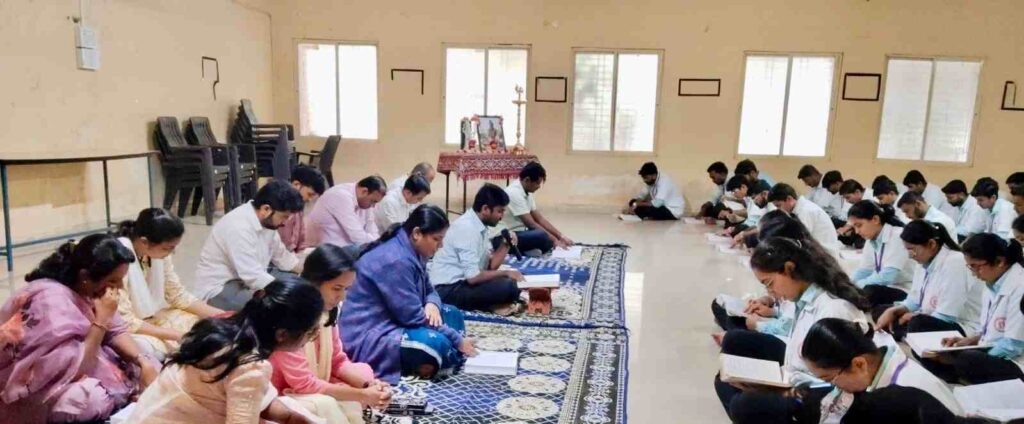
Samhita Siddhanta: “Ayurveda is an ancient system of indigenous medicine that serves not only as a medical discipline but also as a comprehensive philosophy for healthy living.” Samhita Siddhanta represents the foundational branch of Ayurveda, commonly known as the Department of Basic Principles. It deals with the essential doctrines outlined in the classical Ayurvedic texts (Samhitas). As these scriptures are composed in Sanskrit considered a precise and sacred language. this department offers systematic training in Sanskrit to facilitate accurate comprehension and interpretation of the original texts. Sanskrit: Rooted in the Vedic tradition, Ayurveda’s primary literature was authored entirely in Sanskrit. Hence, a sound knowledge of Sanskrit is indispensable for understanding the theoretical foundations and clinical applications of Ayurveda. Course learning outcomes (COs) for AyUG-SA-1 course: CO1: Distinguish the different Samhitas, their importance and methodology and familiarize with the tools of Samhita Adhyayan (e.g., tantrayukti). CO2: Interpret and apply the sutras from the Samhitas. CO3: Apply and evaluate the Tridosha, Saptadhatu and Mala principles (theory). CO4: Practice and prescribe Dincharya (daily regimen), Ritucharya (seasonal regimen) and dietary principles for preservation of health. CO5: Explore and distinguish different types of food, food groups and medicinal dravyas mentioned in Samhitas. CO6: Identify various etiopathological factors and predict different treatment principles. CO7: Recognize and explain the fundamentals behind various therapeutics (Shodhan and allied) and parasurgical therapies. CO8: Develop a code of behavior and show mature behaviour in particular to the scientific deliberation Course Learning Outcomes (Cos) for the AyUG-PV course: CO1: Illustrate the scope and utility of Ayurveda. CO2: Explain Philosophical foundation of Ayurveda, Principles (Siddhantha) of Darshana along with their similarities and relevance in Ayurveda and contemporary sciences. CO3: Analyse and interpret Padartha (Prameya) in Darshana and Ayurveda. Recognize their applications in Ayurveda. CO4: Distinguish, analyse and apply concept of Pramana shastra (Epistemology) in Darshana and Ayurveda. Demonstrate their applications in Ayurveda. CO5: Analyse and apply concept of Karya Karana Bhava in Ayurveda. Course Learning Outcomes (Cos) for the AyUG-SN IN course: CO1: Read and recite Sanskrit prose and poetry with appropriate accent and pronunciation. CO 2: Apply Sanskrit grammar rules (terms, nouns, verbs, suffixes, compounds) to interpret Ayurvedic texts. CO 3: Discriminate and interpret grammatical cases and meanings used within Ayurvedic verses. CO 4: Formulate the prose order (Anvayah) of Shlokas to determine scientific meaning and translate texts. CO 5: Interpret synonyms and derivations of Ayurvedic terms using Sanskrit dictionaries. CO 6: Speak, write, summarize, and express thoughts effectively in Sanskrit. CO 7: Develop ethical responsibility toward the profession, society, and humanity. CO 8: Analyse and explain the important historical milestones in the development of Ayurveda. CO 9: Appreciate the historical status of Ayurveda across different time periods and the contributions made by various scholars (Acharyas). Charaka Jayanti Prashnamanjusha Spardha Shloka Pathantar Spardha Samhita Pathan, July 2025 1_Sanhita Chart.pdf 2_Sanhita Model List.pdf 3_Sanhita Specimens List.pdf
Rog Nidan Evum Vikriti Vigyan
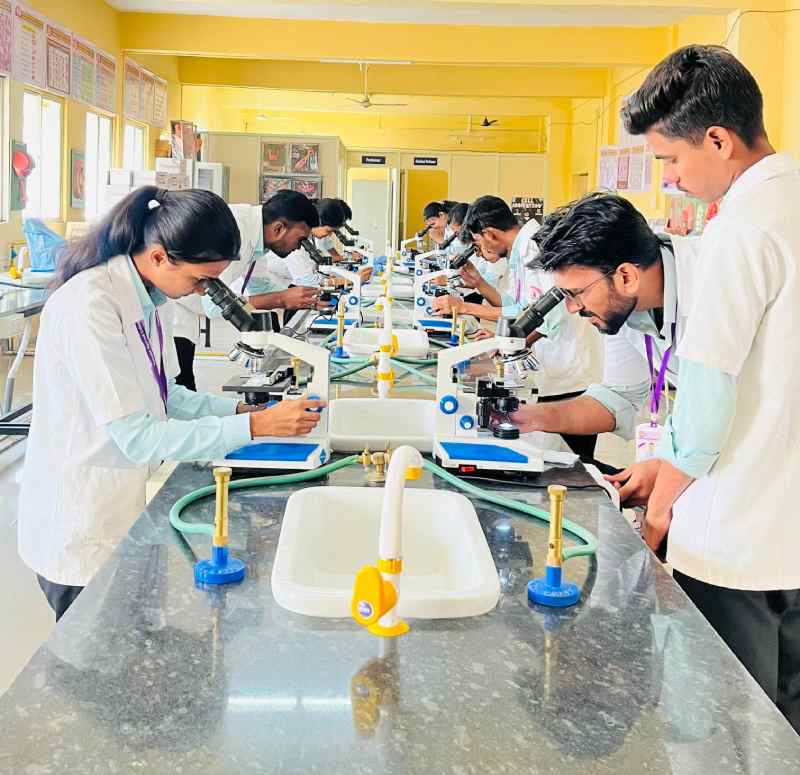
The Department of Rog Nidan Evum Vikriti Vigyan forms the diagnostic cornerstone of Ayurvedic medical education. It focuses on understanding the principles of disease manifestation (vikriti vigyan) and diagnostic methodologies (naidanika vidhi) based on classical Ayurvedic texts integrated with modern clinical and laboratory approaches. Departmental Learning Objectives : Identify morbidities in accordance with the principles of Ayurvedic pathology (Vikriti Vigyana Siddhanta). Describe basic, general, and systemic pathological processes and apply this understanding in clinical diagnosis. Perform appropriate clinical examinations (Pareeksha) using both Ayurvedic and contemporary methodologies (Samakalina Siddhanta). Order and interpret relevant diagnostic laboratory investigations and imaging studies. Diagnose and present clinical cases with sound reasoning (Naidanika Tarka). Follow and integrate advancements in diagnosis (Vyadhi Vinischaya) and prognosis (Sadhya–Asadhyata) into clinical practice (Naidanika Adhyayana). Communicate effectively with patients (Rugna), relatives (Bandhujan), and other healthcare stakeholders (Anya Hita Dharaka). Demonstrate ethical conduct (Sadvritta), compassion (Karuna), and the essential qualities of an ideal clinician (Vaidya Guna). Disease Presentation series by RNVV dept - 2025 Model Competition by RNVV dept - Sept_2025 Blood donation camp by RNVV dept - Sept_2025 Quiz Competition by RNVV dept - Dec_2024
Rasashastra & Bhalshajya Kalpana
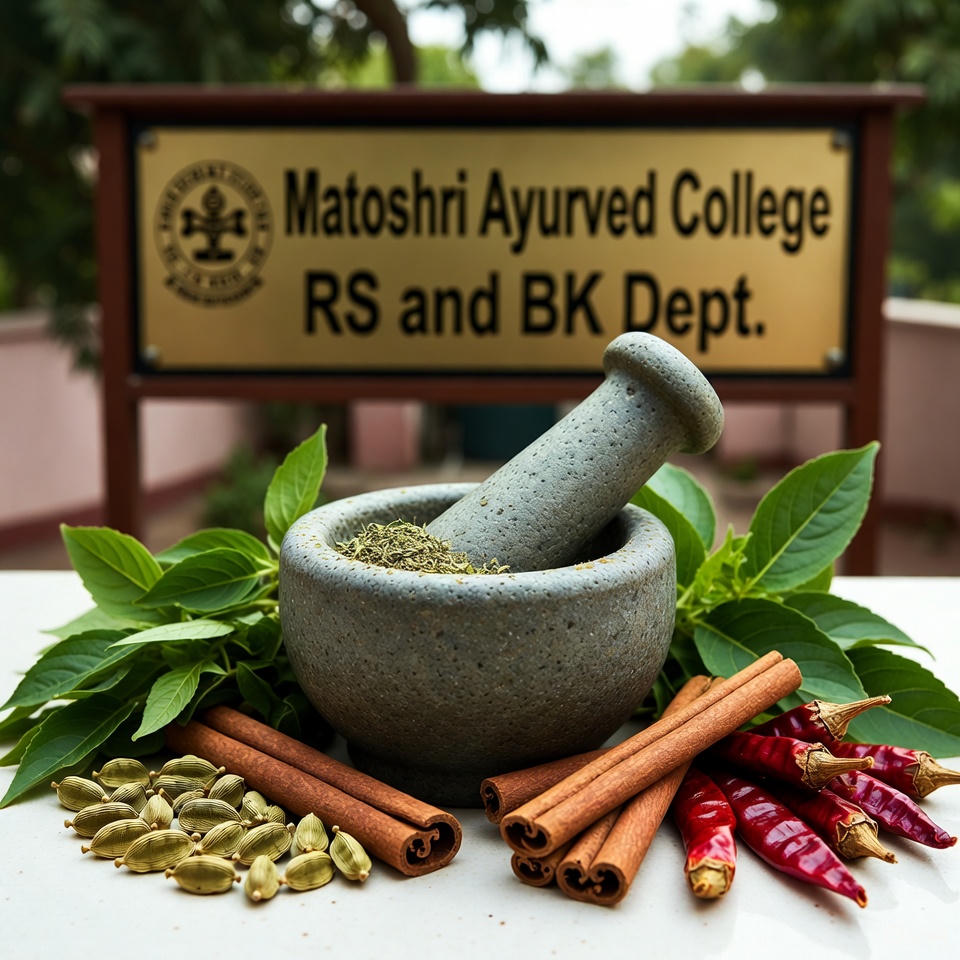
The Department of Rasashastra and Bhaishajya Kalpana is a fundamental discipline within Ayurvedic education and research, dedicated to the science of Ayurvedic pharmaceutics. It encompasses the systematic study, preparation, standardization, and safe administration of herbal, herbo-mineral, and mineral formulations as documented in the classical Ayurvedic texts. Demonstration of the application of principles of Ayurvediya Aushadhi Nirmana (Ayurvedic Pharmaceutics) Demonstration of the application of principles of Ayurvediya Aushadhi Prayoga Vigyana (Clinical Pharmacology) Preparation of Ayurvedic formulations in adherence to quality-control parameters for raw materials, in-process materials, and finished products Justification of the rational selection and administration of Ayurvedic formulations Demonstration of ethical, legal and regulatory aspects of the manufacturing and sale of Ayurvedic formulations Appraisal of research on current and emerging trends in Ayurvedic pharmaceuticals and allied sciences Gandhakdya malahar preparation July 2025 Nirgundi Taila Nirman October 2025 Yantropakarna - Model presentation Nov.2025 Pharmacy visit Nov. 2025
Rachana Sharir
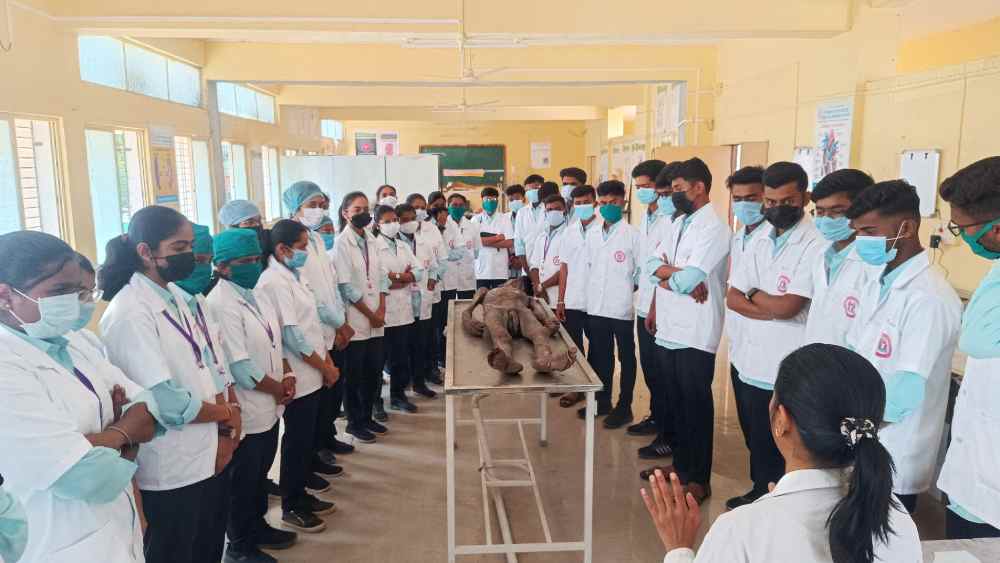
The Department of Rachana Sharir ( Anatomy ) forms a fundamental pillar as it focuses on structural aspects of Human Body. It is engaged in teaching Ayurvedic concepts like Sira-Dhamani-Srotas, Twacha-Kala- Pesi, Marma etc. and Anatomical aspects like Embryology, Osteology, Arthrology, Organology, Histology etc. HIGHLIGHTS: Team of skilled Staff. Spacious Dissection Hall equipped with Cadavers, Embalming facility, Dissection and sectioning instruments. Well maintained museum with Specimens, Ayurvedic _Drishtanta_ models , Bones , Organs, Charts for study references. Departmental Learning Outcomes are : Describe the fundamentals of Rachana Sharir: Garbha Sharir, Asthi, Sandhi, Sira- Dhamani- Srotas, Marma, Kala, Indriya, Snayu, Peshi, Twacha etc.; Interpret and analyze it in relevant context and recognize its significance in Ayurveda. Explain and demonstrate the gross anatomy of Bones, Joints, Artery- Vein - Nerves, Sense organs & Organs of various systems in the human body and their applied aspects. Identify and locate all the structures of body and mark the topography of the living body. Respect the cadaver and perform Dissection with commitment to reiterate the theoretical aspect of Ayurvedic Rachana Sharir and contemporary sciences. Describe the basic principles of imaging technologies and Identify the anatomical structures in the radiographs. Cadaveric Oath Integrated teaching - July_2025 6_DISSECTION HALL.pdf 9_DEPT LIB RACHANA.jpg 11_Rachana Model List.pdf
Kriya Sharir
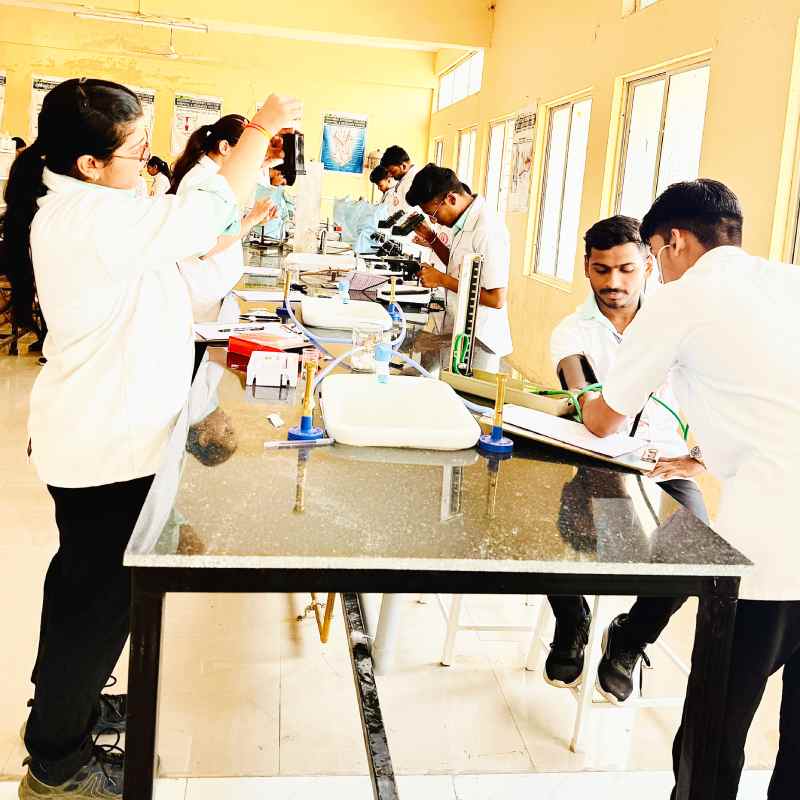
Kriya Sharir (Human Physiology) Department deals with the study of the human body concerning its physiological norms that is the functioning of the human body in its normal state. This subject refers to the physiology and biochemistry of contemporary medical science. The swasthya (Health ) of an individual is based on 3 pillars of the body i.e., dosha, dhatu & mala. Kriya Sharir subject mainly deals with these 3 pillars. Department Learning Objectives : • The basic concepts, knowledge, and applicability of Tridosha (Vata, Pitta, Kapha), Sapta Dhatus (Rasa, Rakta, Mamsa, Meda, Asthi, Majja, Shukra), and Trimala (Mutra, Purish, Sweda) are very important in the critical understanding of the disease. • Kriya Sharir also deals with Prakriti, Strotas, Kostha, Agni, Oja, Mana, Aahar (Basic principles of food), shatkriyakal, the system-wise study of contemporary science, senses, function and dysfunction, etc. Importance Of Kriya sharir Subject : • All these fundamental topics are essential for the proper understanding of etiopathogenesis, diagnosis of disease, and its management which will be covered in para-clinical and clinical subjects. Physiology Puzzle Solving Competition Kriya sharir Shlok Pathantar competition Kriya sharir PPT presentation Kriya Sharir Demo of ECG 5_Kriya Model List.pdf 10_DEPT LIB KRIYA.jpg

Dravyaguna Vigyan
Dravyaguna Vigyan According to Charaka there is nothing on the earth which is not medicine. That’s why Ayurveda considers all substances as medicine, if used for specific purposes in an appropriate way. It’s a complete science of herbal plants. Ayurvedic drugs, especially herbs are prescribed in different pharmaceutical forms, to get maximum therapeutic effect. Subject Objectives : To understand the concept of Dravya (substances/drugs) in Ayurveda. To learn about the classification, properties, and actions of various dravyas. To study the pharmacological and therapeutic uses of dravyas. To understand the principles of rasa, guna, virya, vipak, and karma of dravyas. To learn about the identification, collection, and processing of dravyas. To understand the concept of rasa shastra and bheshaj kala. To develop skills in prescribing and preparing Ayurvedic formulations. Out campus visit to cultivated herbal garden DG Department Out campus Herbal garden visit- DG Department Model making competition DG Department
Agad Tantra & Vyavahara Ayurved
Agada Tantra, is one of the eight clinical branches (Ashtanga) of Ayurveda. This branch of clinical toxicity was considered as the stalwart of Ayurveda which popularized this science across several civilizations around the world. Many great explorers glorified the snake bite management existed in India and this paved way for the popularization of Ayurveda in several countries with Ayurvedic scriptures being translated to several languages and many scholars came to India to study this science. The subject encompasses the detailed study for several toxicological conditions ranging from animate, inanimate and other disease entities with an inherent toxic pathology that enables to apply the principles of Agada Tantra in several diseases of contemporary significance. Objectives - To bring law and medicine together for preparing medical students for their medical, legal and social duties in medical profession. To give sufficient knowledge to handle the cases of poisoning. To create a “first contact physician” who is aware of medical ethics, duties and various acts governing medical practice. To produce a doctor who is well informed about medico-legal responsibilities during the practice of medicine. To provide the services of judicial medical officer, forensic pathology and clinical forensic medicine. To make the Ayurved graduates capable of making observation and inferring conclusion by logical deductions to set inquiries on the right track in criminal manners and associated medico-legal problems. To create interest in research related to toxicology and various medico legal problems. The department also organizes visits Snake Park, Forensic Science Laboratories, State Pollution Control Board, Court visits, Industries, Folklore Practitioners, Surveys, Food Adulteration Testing Centers and many more. These visits help the students update and understand Agada Tantra’s relevance to modern health and lifestyle. With this knowledge, the students are encouraged to practice Agada Tantra with concepts of Garavisha Dooshivisha. They can create awareness of increasing trends of chemical biomagnification in the food chain and ecosystem. Agad Medicine Preparation. Oct. 2025 66KB Visit to Mortuary to Observe Post Mortem Oct-2025 57KB Visit to Pollution Control Board Oct. 2025 100KB